The way we use our kitchens has changed dramatically over the past two decades, and 2026 is shaping up to be a year of thoughtful reflection on what really works. For years, the open concept kitchen reigned as the default choice for any homeowner planning a kitchen remodel in Fort Collins, CO. But lately, traditional, defined kitchen spaces are making a strong comeback, and the conversation around layout is more nuanced than ever.
If you’re searching for a kitchen renovation or planning a major kitchen upgrade this year, choosing between an open concept design and a traditional, enclosed layout is one of the biggest decisions you’ll make. It affects how you cook, how you entertain, how your home feels day to day, and ultimately how much you’ll enjoy the space for years to come. At HWG Services Remodeling & Construction, we walk homeowners through this exact decision every week, and here’s what we’re seeing in 2026.
The Open Concept Kitchen: Still Popular, But Evolving
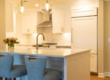
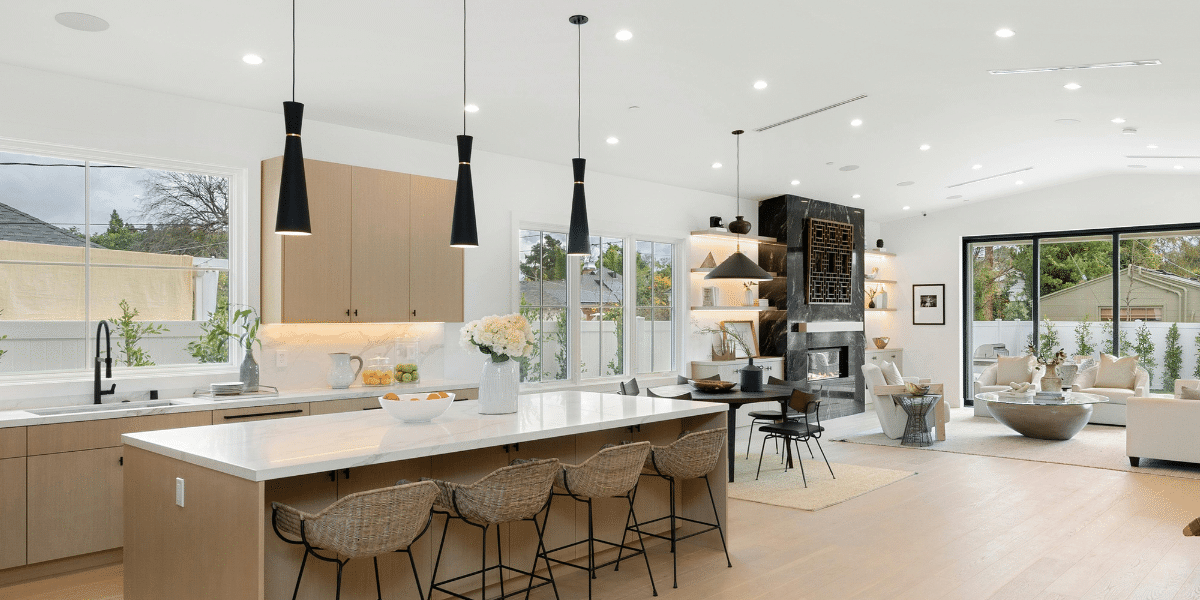
An open plan kitchen living room flows seamlessly into adjacent dining and living areas, often with no walls or only partial dividers separating the spaces. This style has dominated American home design since the early 2000s, and for good reason: it feels spacious, modern, and social.
In 2026, open layouts remain a top choice, but they’re evolving. Homeowners are no longer asking us to tear down every wall they can find. Instead, they’re requesting “broken-plan” or “smart open” designs that maintain the airy feeling of an open floor plan kitchen living room while reintroducing some structure and definition.
The strengths of open kitchen and living room layouts include:
- Better natural light flow, since light from windows in adjoining rooms can reach further into the kitchen
- Easier entertaining, especially when hosting larger gatherings where guests naturally cluster between the kitchen and living areas
- Stronger family connection, allowing parents to cook while keeping an eye on kids in the family room
- Higher resale value in many Fort Collins neighborhoods, where buyers still expect open layouts in updated homes
That said, open concepts aren’t perfect for everyone. Cooking smells travel freely, noise carries between zones, and clutter on the counter is visible from every angle. If you’re a private cook, sensitive to kitchen noise, or simply prefer a tidier sightline from your living room, the trade-offs may outweigh the benefits.
Open Concepts in Smaller Homes
One of the most common questions we hear during a kitchen redesign is whether open layouts work in smaller homes. The answer is yes, and often beautifully. A small open kitchen and living room can actually feel more spacious than a closed-off kitchen of the same square footage, simply because sightlines extend further.
For homeowners with limited square footage, modern small open plan kitchen living room ideas typically rely on a few key strategies: a single peninsula or island that doubles as a divider, light-toned cabinetry to bounce light around, and a continuous flooring choice that visually unifies the zones. We’ve completed dozens of very small open plan kitchen living room ideas in townhomes, condos, and starter homes throughout Fort Collins. With the right design, these compact transformations can deliver some of the most dramatic kitchen makeovers in our portfolio.
If you’re researching open plan kitchen living room ideas or comparing a 20 best small open plan kitchen living room design ideas list online, just remember: photos in design magazines rarely reflect the structural realities of your specific home. A walkthrough with experienced kitchen contractors will tell you what’s actually possible.
The Traditional Kitchen: Making a Strong Comeback
A traditional kitchen layout features walls and doorways that define the kitchen as its own distinct room. This was the standard for most 20th-century American homes and it’s quietly returning to favor in 2026, particularly among homeowners renovating older Fort Collins properties or those who simply want a calmer, more intentional space.
Why traditional layouts are gaining ground:
- Better noise and odor control, keeping cooking activity contained
- More wall space, which translates directly into more cabinetry, more storage, and more flexibility for appliance placement
- Defined function, allowing the kitchen to feel purposeful and the dining or living areas to feel restful
- Architectural integrity, especially in homes built before the 1990s where original walls support the home’s character
The trade-offs are real. Traditional kitchens can feel smaller, more isolated from the rest of the home, and less ideal for hosting open gatherings. Lighting can be more challenging since you can’t borrow brightness from neighboring rooms. But for the right homeowner, that contained, focused feel is exactly the appeal.
The Rise of the “Broken-Plan” Kitchen
The most exciting trend we’re seeing in 2026 isn’t fully open or fully traditional. It’s the broken-plan kitchen, which sits comfortably between the two. This approach gives homeowners the connection of an open plan kitchen dining living layout with the structure and intimacy of a traditional one.
Broken-plan strategies include partial walls, large cased openings, glass partitions, archways, and structural elements like exposed beams or columns that suggest separation without enforcing it. A double-sided fireplace or a tall storage cabinet can also act as a visual divider while keeping sightlines partly open. The goal is to define the kitchen as its own zone without sealing it off entirely.
For many of our Fort Collins clients, this hybrid approach has become the perfect compromise: the kitchen feels like a real room, but the home still flows.
How Layout Choice Affects Your Remodel
Your layout choice has ripple effects across your entire kitchen renovation:
Cost
Removing a structural wall to create an open concept typically requires engineering, permits, and a structural beam, often adding $5,000 to $15,000 or more to your project. Layouts that work within existing walls are usually less expensive, which can significantly lower your overall new kitchen cost. If you’re prioritizing affordable kitchen remodeling, keeping walls intact and focusing on cabinet refacing, refinishing kitchen cabinets, or surface-level updates is often the smartest path.
Timeline
Bigger structural changes mean longer remodels. Open concept conversions often take 8 to 12 weeks, while a traditional kitchen reno can sometimes wrap up in 4 to 6 weeks.
Storage and counter space. Walls hold cabinets. The more walls you remove, the more creative you’ll need to be with islands, pantries, and tall cabinetry to make up for lost storage.
HVAC and ventilation. Open concepts require stronger range hoods to keep cooking odors from settling into living areas. Traditional kitchens often need less powerful ventilation.
Lighting plan
Open layouts require layered lighting (ambient, task, and accent) across a much larger zone. Traditional kitchens can rely on a more contained lighting plan.
A great kitchen remodel contractor will walk you through every one of these considerations before any demolition begins.
Which Layout Is Right for You?
There’s no universal “right answer.” The best layout depends on how your household actually lives.
Choose an open concept if you frequently entertain, have young children you want to keep an eye on, love a bright airy feel, or your home was originally designed around a more open footprint. It’s also a strong resale choice in modern Fort Collins neighborhoods.
Choose a traditional layout if you value privacy and quiet, want maximum cabinet storage, own an older or character-rich home, or simply prefer rooms that feel like rooms.
Choose a broken-plan layout if you want the best of both worlds, value flexibility, and like the idea of a kitchen that connects to the rest of your home without disappearing into it.
Let HWG Services Design Your 2026 Kitchen
Layout decisions look simple on paper but get complicated fast once you factor in plumbing, structural elements, traffic flow, lighting, and how your family actually lives. That’s where the right partner makes all the difference.
At HWG Services Remodeling & Construction in Fort Collins, CO, we’re one of the most trusted kitchen remodel companies in northern Colorado, specializing in custom kitchen transformations that match your lifestyle, your home’s architecture, and your budget. Whether you’re searching for a kitchen remodel, planning a full kitchen refurbishment, exploring kitchen and bath remodeling, or comparing kitchen and bath remodeling contractors, our team handles it all. From kitchen cabinet refacing and small kitchen makeovers to large-scale kitchen and bathroom renovations, our kitchen remodeling services are built around your goals.
Ready to reimagine your kitchen for 2026? Contact HWG Services today to schedule your design consultation. Your dream kitchen is closer than you think.
FAQ: Open Concept vs. Traditional Kitchens
Q1.Are open concept kitchens going out of style in 2026?
Not at all, but they are evolving. Many homeowners now prefer “broken-plan” or “smart open” designs that keep the airy feel of an open layout while adding partial walls, archways, or other elements that bring back some structure and definition.
Q2.What are typical kitchen renovation costs for a layout change in Fort Collins?
The cost of kitchen remodel projects varies widely based on scope. A cosmetic refresh with cabinet refacing and new countertops might run $20,000 to $40,000, while a full layout conversion with structural wall removal can range from $60,000 to $120,000 or more. Removing a load-bearing wall alone typically adds $5,000 to $15,000 to the kitchen cost.
Q3.Do I need a permit to remove a wall during my kitchen remodel?
Yes, if the wall is load-bearing or affects electrical or plumbing systems. HWG Services handles permitting through the City of Fort Collins on your behalf so you don’t have to navigate it alone.
Q4.Will an open concept kitchen add more value to my home than a traditional one?
In most Fort Collins neighborhoods, open concept layouts still appeal to a wider buyer pool and tend to add more resale value. However, in older or more traditional homes, preserving the original layout can actually be more valuable to the right buyer.
Q5.How do I control noise and cooking smells in an open concept kitchen?
A high-quality range hood with proper CFM rating is essential, along with soft surfaces like rugs, upholstered furniture, and curtains to absorb sound. Layered lighting and zone-based design also help create a sense of separation between cooking and living areas.
Q6.Can I get the feel of an open kitchen without removing walls?
Yes. Widening doorways, adding pass-throughs, installing interior windows, or replacing solid walls with half-walls or glass partitions can all open up a traditional kitchen without a full wall removal—often at a significantly lower cost.